Crawl Space Mold & Moisture
White Mold in Your Crawl Space? Here's What It Means and How to Fix It
If you've found white, fuzzy growth on the wood under your house — or you keep catching a musty smell that won't go away — it's a moisture problem talking. Crawl space mold doesn't grow because of bad luck; it grows because the air down there stays wet enough to feed it. The lasting fix isn't spraying the mold, it's cutting off the moisture that keeps bringing it back. Here's how to read what you're seeing, and how we handle it.
The honest version
What is the white mold in my crawl space?
The white or grayish fuzz you see clinging to the floor joists, the subfloor, and the band board is mold and mildew growing on the wood. It takes hold when the crawl space humidity climbs and stays high — and once a colony starts, it spreads across the wood and pushes that musty, earthy smell up into the living space through the floor. The conditions that feed it are almost always some mix of:
| What's feeding it | Why it drives mold |
|---|---|
| High humidity | Mold needs sustained moisture in the air. A vented Atlanta crawl space sits above the threshold for months at a time. |
| Standing water or damp soil | Bare ground and any standing water pump moisture straight into the air under your house. |
| Open foundation vents | In our climate, vents pull warm humid air into the cool crawl space, where it condenses on the wood — fueling the mold instead of drying it. |
| Poor drainage | Water that isn't routed away keeps the whole space damp long after the rain stops. |
Reading the cause matters, because it's the cause — not the mold itself — that decides whether it comes back.
Why crawl space mold keeps coming back
Here's the part most people learn the expensive way. You can scrub or spray the mold off the joists and it'll look gone — but if the crawl space is still humid, you've removed the colony and left everything it needs to grow a new one. Within a season, the fuzz is back on the same wood. Spraying mold in a wet crawl space is mopping the floor with the tap running.
That's why we don't lead with treating the surface. The only thing that actually keeps mold out is dropping the humidity below the level it needs to grow and keeping it there. Fix the moisture and the crawl space stops being a place mold can live. Leave the moisture and no amount of treatment holds.
How we handle crawl space mold and moisture
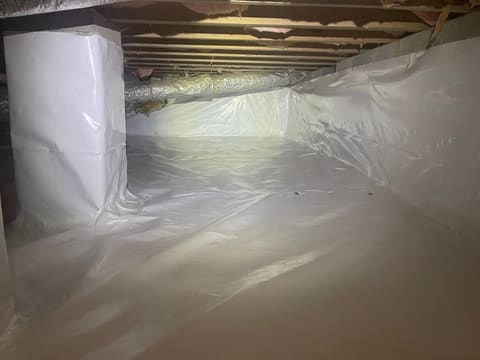
Our work is the moisture side — finding why the space is wet and fixing it so the conditions for mold are gone for good. A typical job means identifying the source, handling any water with drainage and a sump, sealing the space with a vapor barrier and closed vents, and setting a dehumidifier sized to hold the humidity down. That's crawl space encapsulation, and it's what turns a crawl space from a place mold thrives into one it can't.
To be straight with you about scope: we are not a certified mold remediation company. If you have a heavy or health-relevant infestation that needs certified removal and clearance testing, we'll tell you so and point you to a licensed remediation specialist for that part — we'd rather refer it out than overpromise. What we do is fix the moisture that caused it and keep it from coming back, which is the part that actually lasts. Often the two work together: remediation clears what's there, and our encapsulation makes sure it stays cleared.
Why crawl space mold is so common in Atlanta
Our climate is built for it. Red clay soil holds water against the crawl space and keeps the ground damp for days after a storm, and the long humid stretch from May through September keeps the air under the house wet for months on end. Pair that with the open, vented crawl spaces standard in pre-1980 homes around Decatur, Kirkwood, Marietta, and the older neighborhoods, and you have the exact recipe mold wants: damp wood, warm humid air, and no way for it to dry out.
It's why crawl space mold is closer to the default than the exception here, and why the national advice — "just improve the ventilation" — quietly makes it worse in our climate, not better.
Does a musty smell always mean mold?
A musty smell always means moisture, and moisture is what mold needs — so even when you can't see growth yet, the smell is worth taking seriously. Sometimes it's mildew on the surface, sometimes it's a colony already established on wood you can't easily see, and sometimes it's damp insulation or soil with no visible mold at all. What they share is a crawl space holding more moisture than it should.
The smell rises because air moves up from the crawl space into your home — so a musty house is often a wet crawl space announcing itself. If you're catching it regularly, it's worth a look under the house. The free inspection tells you what's actually down there, whether it needs certified remediation, and what it takes to dry the space out so the smell — and the mold — don't come back.
How It Works
Four steps. No confusing jargon.
We keep the process simple and transparent so you know exactly what to expect before anyone starts work.
-
Inspection
We evaluate the crawlspace or basement and document what we find with photos and moisture readings.
-
Assessment
We review moisture levels, drainage, and structural integrity to understand the full picture.
-
Clear Plan
You receive a practical proposal tailored to your property. No jargon, no pressure, no surprises.
-
Repair
Our team performs the work and walks you through the result so you see exactly what was done and why.
Homeowner Proof
What Atlanta homeowners say.
Extremely happy and grateful for the service I received. They came out the same day I called for an estimate and provided it right away. I loved the entire experience, and would definitely recommend them and use them again.
Frequently Asked
Common questions
Is the white mold in my crawl space dangerous?
Does Crawl Daddy do mold remediation?
Why does my crawl space mold keep coming back after I clean it?
Will encapsulation get rid of my crawl space mold?
What does a musty smell in my house mean?
How do I know if I need certified remediation or just moisture control?
Don’t Wait Until It’s Major
Get a clear plan for the space below your home.
Schedule a crawlspace or basement evaluation and understand what needs attention — no pressure, no obligation.
Free & No Obligation
Schedule Your Inspection
Tell us what’s happening under the house. We’ll follow up within one business day.